← Home · Improvement

Stone Column Design for Toowoomba’s Unique Basalt and Alluvial Soils

Together, we solve the challenges of tomorrow.

DISCOVER →

Toowoomba’s urban expansion across the edge of the Great Dividing Range has pushed development onto complex soil profiles where weathered basalt grades into high-plasticity alluvial clays. The city’s elevation near 700 m creates a sub-tropical highland climate that drives seasonal moisture cycles, producing ground movements that challenge conventional shallow footings. At sites along the Warrego Highway corridor and in newly subdivided areas west of the range escarpment, the geotechnical response often demands a Improvement strategy that goes beyond simple over-excavation. Stone column design addresses these conditions by installing compacted gravel columns that densify the surrounding matrix while providing vertical drainage, a combination that directly tackles both bearing capacity shortfalls and the shrink-swell potential of Toowoomba’s reactive soils. When the target stratum is underlain by residual basalt, the design must account for refusal near the rock interface, which is where vibrocompaction techniques become particularly relevant for the upper granular layers before column installation begins.

In Toowoomba’s reactive clay profiles, a properly designed stone column grid can reduce post-construction settlement by up to 70 percent while eliminating the need for deep piling.

Scope of work

The geotechnical contrast between Toowoomba’s eastern basalt plateaus and the alluvial flats of the Condamine floodplain demands a tailored approach to stone column design. On the eastern side, residual clayey silts derived from basalt weathering can lose significant strength when saturated, while the western plains often contain dispersive soils that erode internally if not properly confined. The stone column installation process displaces these fine-grained soils laterally, increasing the horizontal stress and creating a composite ground mass with improved modulus values. Design parameters are typically validated through in-situ permeability testing to confirm that the granular columns will function as effective vertical drains, accelerating consolidation of the surrounding clay. Load transfer mechanisms rely on the column-soil stiffness ratio, which for Toowoomba’s typical overconsolidated clays often falls between 15 and 30, a range where settlement reduction factors of 2.5 to 4.0 are achievable when the area replacement ratio exceeds 15 percent.
Stone Column Design for Toowoomba’s Unique Basalt and Alluvial Soils
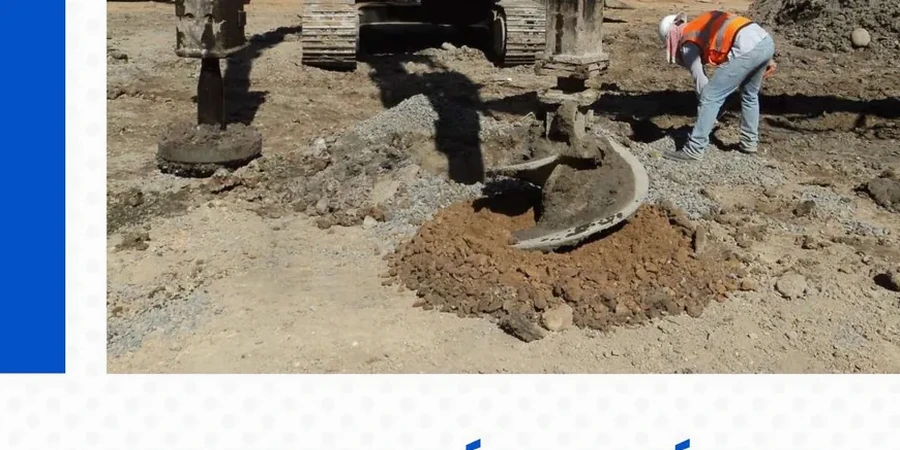
Technical reference image — Toowoomba

Area-specific notes

With a population exceeding 140,000 and growing at nearly 2 percent annually, Toowoomba continues to push development onto marginal land where the risk of differential settlement is acute. Stone column design that ignores the cyclic wetting and drying of the city’s heavy clay profiles can produce a floor slab that tilts within two seasonal cycles. The deeper alluvial pockets found near Gowrie Creek and Westbrook Creek introduce an additional hazard: soft organic silts at depths of 3 to 6 metres that are too deep for conventional removal and too compressible for shallow foundations. A stone column grid installed through these soft zones transfers the structural load to a stiffer bearing layer below, but the design must verify that the column base is founded above any decomposing basalt floaters that could create hard points and uneven load distribution across the grid.

Need a geotechnical assessment?

Reply within 24h.

Email: contact@geotechnicalengineering1.xyz

Technical parameters


ParameterTypical value
Design methodPriebe (1995) with settlement reduction factor
Typical column diameter600 mm to 900 mm
Area replacement ratio15% to 35% depending on target improvement
Column-soil stiffness ratio (n)15 to 30 for Toowoomba overconsolidated clays
Settlement reduction factor2.5 to 4.0 typical
Aggregate specificationClean, hard, angular gravel per AS 2758.1
Drainage functionVerified via in-situ permeability ≥ 10⁻³ m/s

Linked services

01

Performance-Based Stone Column Design

We develop column grids using the Priebe method calibrated against Toowoomba-specific soil parameters. The design package includes bearing capacity verification, settlement analysis under both dead and live loads, and consolidation time estimates that use the drainage function of the columns. Each design is accompanied by a technical specification covering aggregate gradation, installation sequence, and acceptance criteria for post-installation load testing.

02

Installation Supervision and QA/QC Testing

Our field team oversees the wet top-feed or bottom-feed installation process to ensure column continuity through soft zones. Quality control includes aggregate consumption logging, column diameter verification, and post-installation In-Situ via zone load tests or plate load tests. We also perform pre- and post-treatment CPT soundings to quantify the improvement achieved in the surrounding soil mass.

Standards used

AS 1726:2017 – Geotechnical Site Investigations, AS 4678:2002 – Earth-Retaining Structures (design loads and material factors), AS/NZS 1170.0:2002 – Structural Design Actions, AS 2758.1:2014 – Aggregates and Rock for Engineering Purposes, Priebe H. (1995) – The Design of Vibro Replacement, Ground Engineering

FAQ

How deep can stone columns be installed in Toowoomba’s soil conditions?

For the basalt-derived clays and alluvial deposits typical of the Toowoomba region, stone columns are generally effective to depths of 8 to 12 metres. Beyond that, the presence of weathered basalt floaters or refusal on bedrock can limit penetration. The design depth is determined during the site investigation phase using CPT or SPT data to identify the competent bearing stratum.

What is the typical cost range for stone column design and installation in Toowoomba?

The combined design and installation cost for a stone column Improvement programme in Toowoomba typically falls between AU$2,150 and AU$8,250, depending on the treated area, column depth, grid density, and the accessibility of the site for heavy equipment. A detailed proposal is provided after reviewing the geotechnical investigation report.

How do stone columns perform in Toowoomba’s reactive clay soils?

Stone columns perform well in reactive clays because they provide two simultaneous benefits: they densify the soil matrix during installation, reducing the void ratio, and they act as vertical drains that accelerate moisture equilibration. This reduces the amplitude of seasonal heave and shrinkage, protecting lightweight structures such as residential slabs and low-rise commercial buildings.

How long does it take for the improved ground to consolidate after stone column installation?

Because the stone columns function as vertical drains spaced at 1.5 to 2.5 metres, the drainage path length is drastically reduced compared to untreated clay. In Toowoomba’s overconsolidated clays, primary consolidation is typically complete within 2 to 6 weeks after installation, which allows structural works to commence with minimal delay.

What quality control tests are performed after stone column installation?

Post-installation verification usually includes zone load tests or plate load tests on individual columns to confirm the design modulus, along with CPT or SPT soundings between columns to measure the improvement in the surrounding soil. Aggregate consumption records and column diameter checks are also reviewed to ensure compliance with the design specification.
Location and service area

We serve projects across Toowoomba and surrounding areas.

View larger map